Episode Transcript
[00:00:00] Speaker A: Foreign.
[00:00:09] Speaker B: Hi, I'm John Ko and welcome to icons of D.C. area real estate, a one on one interview show featuring the backgrounds, career trajectories and insights of the top luminaries in the Washington D.C. area Real estate market. The purpose of the show was to explore their journeys, how they got started, the pivotal moments that shaped their careers and the lessons they've learned along the way. We also dive into their current work, industry trends, and some fascinating behind the scenes stories that bring unique perspective to our industry. Commercial Real Estate thank you for joining me for another episode of icons of D.C. area real estate. My guest for today's show is Mark Menick, who is president and CEO of klnb.
Drawing from his two decade foundation as the executive at the Peterson Companies, Menek brings a unique developer's perspective to regional brokerage leadership.
In this conversation, he unpacks the critical market shifts defining the commercial real estate industry today.
During the clicks to bricks evolution of digital brands embracing physical storefronts, the growing convergence of retail and industrial sectors, and his optimistic outlook for the transformation of Downtown Washington D.C.
beyond Marketing Market trends. Manek's leadership philosophy deeply embodies bodies stewardship alignment with career coaching.
He fundamentally views his role as being a steward of his partner's equity and KLNB's highly collaborative culture. He pairs this protective stewardship with a passion for career coaching and talent development.
Recognizing that the next generation of brokers requires a map and a guide, menek actively champions KLNB's rigorous internship and mentorship programs to shape emerging professionals. Throughout the interview, he offers invaluable career coaching advice for young practitioners. He be relentless, curious, prioritize immediate follow through, and above all, get into the office to build the irreplaceable in person relationships that truly drive the business.
So without further ado, here is our insightful conversation with Mark Minick. So, Mark Minick, welcome to Icons at DCRE Real Estate.
[00:02:46] Speaker A: Thank you for joining me today.
[00:02:48] Speaker C: Thank you John. Pleasure to be here. Thank you for having me.
[00:02:51] Speaker A: That's great.
So before we discuss klnb, let's start at the beginning.
[00:02:56] Speaker B: What first attracted you to commercial real
[00:02:58] Speaker A: estate and when did you realize this was the industry where you wanted to build a career?
[00:03:03] Speaker C: I don't think that happened until later. I didn't grow up with a passion growing up saying, hey, I want to, I want to be in commercial real estate. Nobody in my family worked in commercial real estate like a lot of people in this business.
So I think I was just, you know, I was blessed to have been brought up by parents that instilled a really strong work ethic in me. And I always had to do chores around the house, which led to having to have a job and did everything under the sun, from laying flagstone patios to working at the local gas station to sell, selling lemonade in Camden Yards, which, you know, like led to the real jobs, quote, unquote, real jobs of my first real job out of school was working in the private wealth space for a small boutique investment firm called Washington Investment Corp. In Georgetown, 1010 Wisconsin Ave. First job out of college where I realized that work wasn't personal enough for me. It's funny to say that because I think ultimately if you make it through the those first few years in that business, it becomes one of the ultimate personal businesses out there, actually managing somebody's wealth management, wealth management, it becomes extremely personal. But when you're 23 years old, it's a really tough business to break into. And here it was. I had all these friends in this thing called commercial real estate. They were out on the streets showing space, going to lunches, making an impact with small business owners immediately as a 23, 24 year old individual. And I said, hmm, that looks really interesting to me. And I got really curious about it. And growing up in this area, all you got to do is talk to a couple friends and family and you realize how many people are in this business.
And I became attracted to it sort of by chance that way and decided to get out of what I was doing and get into commercial real estate.
[00:04:48] Speaker A: Did you grow up in the Washington area?
[00:04:49] Speaker C: I did. I grew up my first few years until I was about 10 years old. I lived in Prince George's county and Upper Marlboro, Maryland. And then my parents moved my sister and I to Montgomery county, where I still live, about five miles from the house that they moved us to. And so I got really curious about commercial real estate at that point, started talking to some friends and family that were in the business and just got really lucky from there, ultimately meeting a few people.
First couple of people I met in the business, Jay Donegan, Grant Ehat. Oh sure, Bob Schwanger, Grant, or excuse me, Jay Donegan, introduced me to a gentleman by the name of Taylor Chest. Of course, because Grant was small enough that he really didn't have any opportunities to bring somebody on.
And he said, you should meet a friend of mine named Taylor. And if you know Taylor, it takes a little while to break into him. And I was relentless about calling him and calling him back. And eventually he gave me an audience took a little liking to me, introduced me to a couple other people at Peterson, and eventually got an opportunity to start there.
Extremely lucky.
[00:06:04] Speaker A: Both Grant and Taylor have been podcast guests, as you well know.
[00:06:08] Speaker C: I do know that I really enjoyed both of them, and I especially enjoyed John and Taylor, of course, together, because they told a lot of stories that I had some front row seats, too.
[00:06:17] Speaker A: Let's go back a little further. Looking back on your education at the University of Maryland and later at NYU Shack Institute, what lessons from those years still influence how you think about the real estate today?
[00:06:31] Speaker C: It was Maryland and then the Johns Hopkins program.
[00:06:33] Speaker A: Okay.
[00:06:34] Speaker C: And, you know, at Maryland and in my undergrad in College Park, I had a lot more, a lot of fun, I think. I really.
I was in the business school there, learned a lot in the business school there. But really what I learned most, I think, during those years was, as most college kids, is what it's like to be truly independent and the value of building relationships and what those relationships could yield.
And it wasn't really with a business sense at that point. I was just too young. I wasn't that focused on my career at that point, but I think I really gained a perspective on how valuable a trusted relationship could be. So I think that's what I learned most during my undergrad years.
Transitioned that to my early years in my career, decided to go back and do a little bit of continuing education at Hopkins, where I think I learned much more technical stuff. Sure. I still use a discounted cash flow spreadsheet that I think Mark Hassinger gave me from. From Johns Hopkins. Johns Hopkins. So that's where I really sort of honed the technical skills. So, you know, the relationships got me in the room. And I think the technical stuff that I learned later on allowed me to have the credibility when I was in that room.
[00:07:51] Speaker A: Were you at Peterson when you did that?
[00:07:53] Speaker C: I was. I was. And it was a few years after being a Peterson. Wasn't immediate. I had spent, I don't know, by memory, five years at Peterson before deciding to do that.
[00:08:04] Speaker A: So you spent more than 20 years at Peterson Companies during a period that the Washington region experienced tremendous growth.
What were the most important lessons you learned from operating on the developer side of the business?
What were your major influences there and why? We talked about a couple of them already.
[00:08:22] Speaker C: Yeah, I was just extremely lucky, I think, to get the opportunity to go work for a family company like the Peterson Companies and an individual like Milt Peterson and John Peterson, Taylor Chess, Bill Smith and Emory Peters, Jim Beccarelli the names go on and on. These were the most brilliant people in real estate development. And I happened to just get a seat in a cubicle right outside of them starting in 1998 and spent almost 20 years until 2017 with that company.
And the amount of development and growth that occurred during that time, I don't think will happen again in a 20 year span in this region for an awfully long time. So I was extremely, extremely lucky from a time perspective, but also from the seat that I got at the company that I got it in, it's not lost on me how lucky I was to do that.
[00:09:28] Speaker A: I look at them as being perhaps the most pioneering real estate development firm in the region over the last 25, well, 40 years since I've been here. Just amazing.
[00:09:41] Speaker C: It is amazing. And so many people talk, so many people in the retail space talk about the retail success that that company's had. I mean, think about in those 20 years. Fairfax Corner, National Harbor, Downtown, Silver Springs, Virginia Gateway, Fairfax Corner, East Market, Fairlake center goes on and on and on. But you know, the truth is when you're inside that building or the more you know about that family and what that company's done, retail is just a small sliver of it.
[00:10:07] Speaker A: Well, you know, it's interesting. The only retail interface that we had when I first I started doing business with them in 1986.
So when I first moved here in 85, I met Milt and the whole group and they had a fellow by the name of Skip Costin who was the retail group and it really was his own company and he was the developer of retail.
Whereas Milt and Till Hazel, who the company is called Hazel Peterson at that time were land developers. I mean that was really what they were. They were looking at the dirt.
The vertical came when David Sheikh was hired from Prudential to build office buildings for them back in the late. In the early to mid-80s and started, you know, doing Fair Lakes and several other office parks. So that didn't really evolve. And you know, they had, they were mostly doing land development and subdivision sales to home builders at that point. And they also had Bill Smith doing multiple multifamily.
So it was kind of a, an evolving company based on starting with the ground and going up from there. It's basically all it was. But they were the land use barons of Northern Virginia. Other than there were probably maybe half a dozen companies that did almost 90% of the land development in Northern Virginia.
[00:11:27] Speaker C: Pioneering is a good word. And they continue to reinvent themselves even today. I remain Very close with the company and with the family. And I'm continuing to learn from them.
[00:11:38] Speaker A: So you helped execute projects such as downtown Silver Spring.
And that whole story was told by not only John and Taylor, but also by Brian Folger, who was their partner.
He told that story in the podcast as well. So I encourage listeners to go back to those to hear about Silver Springs evolution, because it was a real problem. They were going to build this massive mall by the Canadian group, Triple Five, or whatever they were called. And then that blew up because the community didn't want it.
[00:12:11] Speaker C: Yeah.
[00:12:11] Speaker A: And so Bryant and Milton and Taylor and everybody and Tom Maskey listened to the community.
[00:12:18] Speaker C: Yeah. And it took a major undertaking, major collaboration, I would say, from the public sector, too. It wouldn't have happened, you know, if there wasn't that private, public sort of relationship which is so important in some of those, especially like more densely populated, mixed use redevelopment type things.
[00:12:38] Speaker A: I mean, Silver Spring, it's probably the oldest urban market in Montgomery County.
[00:12:43] Speaker C: Right.
[00:12:44] Speaker A: Even before Bethesda.
[00:12:46] Speaker C: You don't do that with a lot of very different partners.
[00:12:49] Speaker A: Right, right. And then, of course, national harbor was nothing until Mel Peterson came along.
And that was a failed office. They were going to build a massive office building. Jim. I forgot his name, in fact.
[00:13:03] Speaker C: Jim Evans.
[00:13:04] Speaker A: No, he was an architect. He built the towers over here.
[00:13:09] Speaker C: Port America.
[00:13:09] Speaker A: That was what it was called. Yes.
And the guy who ended up living
[00:13:13] Speaker C: in a trailer on the site because
[00:13:15] Speaker A: he almost went bankrupt, Milt comes along and the vision he had was just spectacular.
[00:13:21] Speaker C: Incredible.
Incredible.
[00:13:24] Speaker A: Tom Maskey gave me a tour originally with my group, and it was just dirt moving around. And we drove the site in an suv, we come back, have lunch and Milt walks in.
So Milt tells the whole story and what he was thinking about. He looks at this gigantic model. It was just a great. It was a great day.
[00:13:42] Speaker C: That model was legendary. People still talk about that model.
[00:13:46] Speaker A: Yeah. I imagine he has it still somewhere. And they have it still.
[00:13:49] Speaker C: He might have it in pieces. It might be with the architects, I'm not sure. But we built a couple of those models through the years and shipped them out to Las Vegas to sell the Vision. It was a hard thing to get people to fully understand even after you drove them around the site. But nobody did it better than Milt to explain it to.
[00:14:06] Speaker A: The anchor for the property, of course, was the big convention hotel.
[00:14:11] Speaker C: Correct.
[00:14:11] Speaker A: Which is an interesting anchor when you think about it. How many.
I mean, that takes vision because you had to have a draw for that, for that scale of project of some sort. So to be able to come up with that idea was.
[00:14:27] Speaker C: Well, those visions change over time too. You know, I don't know if the idea of having a hotel operator out of Nashville, Tennessee was the original vision for national harbor, but, but that was the brilliance of Milt and the brilliance of the Peterson companies is to adapt your vision as the personality of the real estate changes and the community speaks up and the market changes and all the different dynamics that go on in projects. All of those projects take years and years and years to bring to fruition. Sometimes decades, sometimes decades. So you gotta be able to adapt to the changing conditions of the market in order to realize the vision or change the vision.
[00:15:08] Speaker A: So were there any unique moments at Silver Spring or National harbor that you remember in your experience that were extraordinary?
[00:15:16] Speaker C: Oh, there were so many.
[00:15:18] Speaker A: Come up with a couple of them.
[00:15:19] Speaker C: There were so many. There was, you know, building national harbor more. So I was more intimately involved in national harbor than I was at Silver Spring. But so more of my memories were from there for sure. But we built it at a time. It was a really, really stressful time in the Marketplace. It was 2008, I think, trying to think of the day, April 1, 2008 was the day that Gaylord said, you need to be done. And I don't know if you can do a little research as to what was going on in April of 2008.
[00:15:50] Speaker A: Bear Stearns shut down in March.
[00:15:52] Speaker C: It was a really, really bad time. So there were some great stories from back in those days about like how we got through those times and dealing with the various different lenders and hey, look, if you want to take it back, you can. But I think we're, we meaning the Peterson companies are the best team most suited to finish this thing to fruition. So you got to work with us and they did. And, and, and we, we. You know, at that point I was, I was directly responsible for all the retail, dining and entertainment sort of merchandising and leasing for the project. And at that point, pre 2008, during the pre leasing of national harbor, we had it all filled with all major brands. And once that hit, once the 2008 came, that all went away and we had to reimagine sort of what, what the merchandising was going to be in a non traditionally anchored development, entertainment development being built in Oxon Hill, Maryland, you know, outside the city limits. It's.
I don't know what you know about retail leasing. I know you know a little bit about it. It's it's. They. They don't have a lot of creativity when they're trying to do new deals. There's much more traditional options that they had. So we had to do a lot of creative things to go outside of the market, to get unique concepts to come inside the market. Frankly, it was a project early on that was better understood nationally outside of our market than it was understood here at home because of the. I mean, you brought somebody here from the outside.
They didn't come with the preconceived notions of where we were. To them, we were just on this amazingly beautiful piece of real estate on the Potomac river, just steps away from Alexandria, down the river from the capital of the free world. And they fell in love with it, just like Milt Peterson did.
[00:17:40] Speaker A: Well, the infrastructure that was spent there to get the transportation from Northern Virginia and the exit ramps on the, on the Wilson Bridge, I mean that was a huge investment.
[00:17:54] Speaker C: The only cul de sac on the Beltway is what we used to say.
[00:17:57] Speaker A: It's incredible.
[00:17:58] Speaker C: It's literally the only exit on the beltway that goes into a private development. That was also the brilliance of that company being able to pull off those things in the background before you even go to market with the project.
Also the flexibilities that they had with site planning and other entitlements or things that were happening in the background that allowed us to move, build, you know, reshape buildings and as long as we stayed in general sort of boxes. Brilliant was this flexibility that allowed us to get to market a couple of years faster than anybody else could get to market. Which when you're building something like that and the timeframe is already so stretched, it's so critical.
[00:18:39] Speaker A: And then other retail, I mean up in Gaithersburg you built the Riotonian was another project.
Then of course the big power centers in Northern Virginia, Fairfax Corner and Fair Lakes and probably two or three other major mixed use primarily.
But none were really vertical. They were all pretty much horizontal at the time.
And then out loud. And of course they're now doing stuff with a little bit more density to it, which is interesting. Yeah, it's interesting.
[00:19:15] Speaker C: Well, it was a. Not only did we were able to do a lot, a lot over 20, that 20 year stretch, I was able to do a lot of different things, as you just alluded to, you know, go from national harbor to a power center in Fair Lakes, it was.
I think even to this day I'm attracted to doing a variety of different things.
You never get bored in this business And I've applied a lot of that to what I'm doing here today.
[00:19:42] Speaker A: Commercial real estate often rewards pattern recognition.
What did decades of merchandising, leasing and place making teach you about human behavior and how people actually use places?
Yeah,
[00:20:04] Speaker C: We realized, I think early on that our projects were not just real estate projects. They were of a size and scale where we were really changing the communities in which we entered.
And what I realized early on is that in order to change the habits and the makeup of a community, it does not happen overnight and it does not happen when you deliver the project. I don't care who your anchor is.
It takes years, years and decades to realize the full vision of these developments. And so oftentimes it was a little frustrating, frankly.
We were striving towards completion and at completion you thought your vision was going to be realized. And frankly, it really wasn't. I mean, it was in a lot of respects, but not how you envisioned it in your head.
It needed time to mature, to, to grow up, to change, to adapt to what the community wanted it to be. We really, we would hand the community something and then they would make it what it really wanted to be. And that was frustrating at times, especially at places like national harbor, where we were really trying to engineer something that frankly didn't necessarily ever belong there, per se.
Belong might be the right word, but
[00:21:45] Speaker A: I don't think there's enough. When you think about it, I don't know if there's another property like it in the United States, if not in the world. It's a unique property because of the different uses and the different way things kind of fit together there. It's a unique situation completely in that location.
You know, if you'd said 10 years before that, and Milt sat there and said, this is what we're going to build and this is what it's going to be.
People would have looked at him like he was from Mars.
[00:22:17] Speaker C: A lot of people didn't look at him like he was from Mars. I still remember being in one of those, one of the meetings or one of the networking events that we had there on site while we were under construction. We were in Building E is what we called it. It was where we put McCormick and Schmidt and we used to have our model upstairs in the office, the big sales center. We had one of these big ICSE or NAOP or ULI or something.
There's probably 150 people in the room. And one guy stood up and I'm not gonna, not gonna say his name, but he asked a question that was kind of like.
You could tell he was trying to get milk, trying to put him on the spot. Almost like. Almost like a why are you doing this? Kind of question, like.
Or, like, are you crazy? Or like, what are you doing this for?
And mild, I'd never forget it. He said, you know, he kind of looked back at that guy. He goes, why do people climb Mount Everest?
You know, like, there's no, you know, sometimes there's no reason other than accomplishment.
And that's why he was doing it.
[00:23:20] Speaker A: Well, it was, as I said, and I've said this many times before, there was no one that I ever met in the industry like him.
He made you feel like you were the only person in the room when you talked to him. Absolutely, because he was very focused on you and, you know, and a humble man in many ways.
[00:23:38] Speaker C: But he could be tough, too. Oh, sure, he could be tough, too. He had the magic of both of those sides. And I'll never forget when I went in his office to tell him that I was leaving, you know, he knew that this wasn't a negotiation. Like, I wasn't in there to tell him I needed something more or whatever. He probably was tipped off, too. But somebody that said, mark's going to come in and talk to you. But he knew. And, And. And I'll never forget, he. He sort of like sat back in his chair like he did, and he said, you know, and I told. He said, tell me about what you're. You're going to be doing. And I told him about. He obviously knew who calenb was. I told him about the role that I was going to have as the president, president and leading the organization. And I told him about their vision that they had for their next phase of their company and some of the stuff, the planning that they'd done even before hiring me and the planning. The strategic planning that they had in place for where they wanted to go.
And I told them all about it. And he sort of said, like, you know, you're gonna. You're. You're. They're extremely, extremely talented people over there.
Extremely talented salespeople over there. Salespeople can be tough to manage sometimes. And he's like, you just gotta.
He said, you know, the reason why they're hiring you is they trust you, and you're good at that. You've instill a lot of trust in people, but what you need to do is let them do what they do.
[00:25:07] Speaker A: Get out of their way.
[00:25:08] Speaker C: Get out of their way. Basically, he said, but every now and then. This is why I'm going back to the. He can be tough sometimes.
He said, but every now and then, you know, they're going to do things that you don't like, and you're just going to have to let it go, get out of their way, let it go. But every now and then, there's going to be somebody that does something that you need to send a message to. And he said, you know what you need to do with that person? And I said, what? He said, you need to punch him. And I said, where? Or I said, really? And he said, yeah, right in the nose. And he said, you know where? I said, where he goes in front of everybody.
And he didn't literally mean punch the person, obviously, but he. Figuratively, you gotta send a message sometimes.
[00:25:47] Speaker A: Yeah.
[00:25:48] Speaker C: And he was right. I mean, this is. Most of what I do here now is staying out of the way is really. I mean, people here are so talented at what they do. And who am I? Just because I built a couple of projects around the region for a developer to tell them the way to do it, I'm really not suited to do that. I can offer a piece of advice here or there, but at the end of the day, I just got to stay out of their way.
So. Makes my job sometimes easy because I work with really good people.
[00:26:19] Speaker A: Yeah, well, we'll get into this later. But training young people, you have to give them a guide. Yeah, but you know, what you're talking about is people that have been in the business, they know what they're doing and they have a good sense that maybe a different direction than you would go, but you trust them because they're able to deliver.
If they can't deliver, well, then that's a different story.
[00:26:42] Speaker C: Yeah, the next generation is different. The younger generation, the mentoring, the internships, all that, all the stuff that we do that's different. Staying out of their way is definitely not the secret sauce with them.
[00:26:52] Speaker B: No.
[00:26:53] Speaker A: They need a map.
[00:26:55] Speaker C: They need help.
[00:26:57] Speaker A: Right, exactly.
So during your years as a developer, Edwin Petersen, what market trend did you recognize earlier than most people?
[00:27:08] Speaker C: I don't know if I realized anything. Personally, I think we recognized at Peterson better than most is that retail is entertainment.
Everybody says that now.
I think we realized that really early, even going to the grocery stores as some form of entertainment. And so we were developing places, we weren't developing places.
[00:27:32] Speaker A: Who instilled that.
[00:27:34] Speaker C: I think a lot of that actually came from Tom Maskey.
[00:27:38] Speaker A: Tom came very special man.
[00:27:40] Speaker C: Very, very. Tom is a very, very important person. In my career trajectory. I worked directly underneath him at Peterson for many, many of those years.
Brilliant, brilliant.
[00:27:52] Speaker A: You know where he got that right?
[00:27:53] Speaker C: Simon.
[00:27:54] Speaker A: Right. Simon Property.
[00:27:56] Speaker C: Simon Property Group. Yeah. And they, they did, they did that stuff very well too, as did most mall developers of the time. But we, he brought that and Milt put his fairy dust all over it and, and that's I think where it really came from.
[00:28:13] Speaker A: I mean I think I look at when Tom was hired at Peterson, that changed the entire company's trajectory of going into the becoming a retail focused, not absolutely focused, but they were retail was. Became the product type to.
[00:28:30] Speaker C: Absolutely. We talked about that 20 year stretch.
For me it was 97 to 17, let's call it. Tom probably got there in like if I had to guess, 93, 94.
And yeah, I was riding a lot of the Tom masky wave for sure.
[00:28:48] Speaker A: Yeah, I haven't had Tom on yet, but I will eventually I think would like to.
[00:28:53] Speaker C: He would be a great one.
[00:28:55] Speaker A: Yeah, it's quite a story.
[00:28:58] Speaker C: So.
[00:29:04] Speaker A: Conversely, what assumption did you once have about real estate that experience later proved wrong and you came out in the brokerage industry.
[00:29:19] Speaker C: I think we talked about this already a little bit and I can't think of anything else so I'm going to go back to it. But that is that you can't change these people's habits.
It takes time and you may think you know what the community wants, but the community is going to really ultimately tell you what they want. So it's really, really hard to change people's habits Is I think something that I was ignorant.
[00:29:40] Speaker A: You're talking about the consumer.
[00:29:41] Speaker C: The consumer, yeah.
[00:29:43] Speaker A: Okay.
[00:29:44] Speaker C: I was ignorant about early on thinking that we could, you know, I know that there's not one of these in the market, but we can do it and it'll be successful. That that didn't always work.
[00:29:56] Speaker A: So in 2017 you became the first outside hire and first non broker to lead KLNB in its history.
What convinced you to leave a successful career on the ownership side and make that leap?
Yeah,
[00:30:13] Speaker C: I showed up at Pearson as a 23 year old and I could have stayed there my entire career given the relationship I had with the family.
[00:30:22] Speaker A: Sure.
[00:30:23] Speaker C: And the product type that we're working on and how they took care of me and the how it allowed me to stretch professionally. But you know, they always say change is good and in a lot of ways I was always going to be that 23 year old kid that walked in the door 20 years prior. And so I always felt like I needed to do it, I needed to do something else. Something else. I had sort of like an entrepreneurial itch I needed to scratch. And that might sound weird, here I was working for one of the most entrepreneurial, pioneering companies, but I was doing it for them.
I felt just though I needed to go scratch my own entrepreneurial ish, do it for me. And whereas Canopy isn't the Mark Menick companies, it still allows me to sort of really have my hand on the steering wheel much more than I did Pierce. And it's just something I felt as though I needed to do. So I was always curious about where I was going to go next in my career. And frankly, I wasn't seeking this role out at klmb. They sought me out, but it allowed me to really change my thinking. Say, hmm, they think I can do it.
Maybe I should think I can do it too.
[00:31:32] Speaker A: Let me refine that a little bit and try and pick it apart. So there are a lot of ways to succeed in the middle of your career. One is to do what you've done and go in the direction of brokerage and management. So basically you're overseeing people and managing and leading.
Another way to do it is to kind of start your own company, acquire real estate and start doing your own deals, either buying or developing or a combination of both. Setting up your own operating company, basically to own, be an equity owner, which you had been doing for 20 years.
So the question is, what made. I mean, they came to you with this opportunity, so there must have been some things they saw in you in leadership and. Or the ability to herd cats, in essence. Because that's in essence what it takes in managing a brokerage firm.
As opposed to somebody coming. You said, hey, Mark, let's go, let's go buy this asset and start, you know, developing it. You lease it for. You lease it. I'll raise the money for it and let's have. Let's go from there.
[00:32:40] Speaker C: Yeah, well, it. Here I was presented the opportunity, which felt good. Right. They wanted me. They wanted me to run this company that I admired so much. I mean, I was running retail Peterson for 20 years. Where do you think I got all my tenants? I got them from klb. I was like, wow, this is an amazing organization.
[00:33:00] Speaker A: There are other companies, but yeah, of course.
[00:33:04] Speaker C: Yeah, of course. But a lot of them were controlled by klmb. Sure. So I thought that was great. But they also had sort of developed a playbook as to where they wanted to go.
And that to me was what was really enticing. Not Coming here and managing a bunch of people, which frankly was the one thing that, the reason why the initial call. I said, no, thank you, I'm not that interested when Michael Patz called me about it. But he explained the partnership structure and how that works. And you know, you're not exactly going to be a man, you're not going to be a managing director in those terms. What we really need you to do is to be a leader and to help us grow and help us grow into different disciplines. And so I said, I'm going to, I'm going to be getting out of the day to day deals. But boy, what, what kind of excitement of a project is that is to grow a company that, into multiple different facets.
And I was really, really enticed by that. I also knew that it was an extremely entrepreneurial group where we allow for the freedom and flexibility for people to, as long as it doesn't conflict with clients, to, you know, dabble in our, in our own real estate as well. So I'm able to sort of have my cake and eat it too and do some deals here, there on the side with some of the best minds in all of real estate in a very, very collaborative way while running this enterprise.
So it was a move that I made. I didn't know exactly what I was getting into. There was a lot of surprises along the way after I got into it.
But I'm extremely, extremely happy that I made it.
Allowed me to stretch. It was really uncomfortable. I'll never forget coming home from work those first few months after starting the job, being so exhausted.
I mean, I was working from an hours in the day perspective. I wasn't working any harder than I was working at Peterson. I put in a lot of hours at Peterson. I loved getting there early, I loved staying late and I would do that at KLMB too. But it was a lot harder work because it was uncomfortable work.
It was teeth clenching kind of work because after you've been doing other work for 20 years, it's not as teeth clenching anymore. You've done it a bunch of times. It's repetitive and you know what you're doing and every situation is more comfortable. So you go home at the end of the day and you have some energy left here. I'll never forget coming home the other day and how exhausted I'd be because I was learning as I was fighting. It's a fire hose, it's fun. I, I get uncomfortable now when I'm, when it's too comfortable. You know, there's Moments right. In any given trajectory of life where things are crazy and things are not so crazy.
Maybe one of these days I'll get a little bit more comfortable with the not so crazy days. But you will so far. You will. So far. It makes me more uncomfortable when they're not that crazy. I like the crazy days.
[00:35:52] Speaker A: You succeeded. Andrew. George.
[00:35:55] Speaker C: George Lakis.
[00:35:56] Speaker A: George Lakes. After a long and successful tenure, how did you approach earning trust while establishing your own leadership style?
[00:36:07] Speaker C: Yeah, I think it. To me it comes relatively easy. I like people. I'm interested in people I have because of my upbringing or whatever. It might be some empathy for what people are going through. I've been through some stuff on my own, suffered loss with my family and whatnot. So I think it's just caring. It's pretty easy. You just gotta care about people a little bit. And it's hard business sometimes, right? Because we're hard charging. We gotta get it done.
Every now and then you gotta run over some people to get there like.
But you gotta turn around and realize who maybe you ran over and acknowledge it a little bit. And so building trust I think is kind of easy. You just gotta give a. You know what, you gotta care.
So for me, I don't know. I know I don't do it perfectly, but I think it versus some other skills, it comes a little bit more natural to me.
[00:37:06] Speaker A: How do you smooth over rough edges with people?
[00:37:08] Speaker C: Sometimes I let a lot go, try not to be as stubborn as I used to be in the past.
And I let time go by.
There is, you know, we have an amazing culture here, don't get me wrong. But there's stuff that happens. There's friction, there's friction, disagreements happen.
This is gonna sound like I'm being just lazy, but like sometimes I just do nothing about it for a day or two.
I equate it to my children. Sometimes if I'm upstairs in the bedroom getting ready for work and I hear them downstairs, the two boys downstairs screaming at each other, I have two options. I could go down there now, there's going to be three people arguing if I go down there. Or I can wait a little bit upstairs and if I don't hear any glass breaking or blood shattering, then most of the times it's just going to work itself out. So in some ways I just stay out of the way and deal with it tomorrow when things calm down a little bit. Don't send the email that night and maybe don't send the email, period.
If you have to send the email, write it and put it away.
And then likely when you wake up the next morning, 100% of the time I'm changing the tone of that email and excuse me, many of the times I'm not even sending it, I'm realizing, why am I even sending an email? I'm jumping on the phone or I'm driving up to that office to see the person.
[00:38:38] Speaker A: That's great.
What surprised you most about leading a brokerage that you didn't fully appreciate before taking the role?
[00:38:48] Speaker C: I didn't realize how much I was getting out of the real estate game.
[00:38:53] Speaker B: Interesting.
[00:38:55] Speaker C: I mean, at the Peterson Companies, I was in the real estate game. We were literally building places from scratch, acquiring the land, titling the land, designing the project, merchandising the project, managing the project, maybe even sometimes selling the project.
And at KLMB, I have 110 people that are in the real estate business, and I am not as much in the real estate business as them.
And that part of it is taking a little bit of getting used to. Because I love the real estate game and I'm allowed that I'm able to do it in a variety of other ways. But I didn't realize coming in running one of the best real estate companies in the region, you wouldn't think that you were getting out of the real estate game so much. That was a little bit of a.
[00:39:48] Speaker A: So you're not looked at as somebody to go and help rain, make as far as deals or bring business in. You were looked more as to let other people do it and encourage them and support their efforts in doing it.
[00:40:01] Speaker C: I like to think it's a little bit of both, but we've got so many people and do so many different things that I can only do so much rainmaking.
Right. So I.
I always say this. It's my favorite part of what I do here is developing business and making rain and winning assignments and bringing people in assignments, putting teams together.
And I still do a fair amount of that. I try and spend most of my time focused on that and just have a team that can do the rest of the operational stuff. But there's only so much impact that I can have across five different offices, 110 different people, and a dozen different disciplines.
My impact on all of that gets spread pretty thin. And obviously I can have a deeper impact with retail and in certain markets where I used to work or with certain tenants that I used to work with. So I still like to do it, but it's hard to be super impactful across the whole organization.
[00:41:00] Speaker A: Your role is different.
As someone who has seen markets from both the ownership and broker side to what indicators do you personally watch when trying to understand where the market is headed?
[00:41:13] Speaker C: Yeah, there's so much information out there now, it's almost hard to decipher what's
[00:41:19] Speaker A: the signal and what's the noise.
[00:41:20] Speaker C: Exactly. And there's a lot of noise out there.
What I like to do is it's going to sound cliche or whatever, but I walk the halls. I mean, I can learn so much from the people at KLMB about what's going on in the marketplace, about how they're feeling about what's going on. When I pick up the paper or read what's going on the market, it's so widely publicized by that point, there's no surprises in there. There's nothing new in there.
But if I walk the halls, I get a true sense of what's coming, coming.
These people are literally out on the streets, literally, with the prospects literally driving the streets, finding out what they're going to do next.
And so I can just, by walking the halls, find out the vibe or the feeling as to what's coming. Now is a perfect example. We are, you know, I'm sit. When I'm in my office, I'm looking down at the numbers, and we're just coming off of three banner years and the start of 20, 26 numbers are kind of like flat, which is good. We're coming off a banner year. So for the numbers to be flat is not a bad thing. But I'm like. I'm like, why isn't this the fourth or fifth banner year? Like, what's going on? Something's really going on, I think kind of what's going on. Deals are just taking longer. We're starting to see the effects of some things that were happening 12 to 18 months ago with Doge and some of the layoffs in the government. And now when I'm over here just counting the money that's coming in, I'm seeing the effects of something that was happening 18 months ago. So I'm stressed out looking at these numbers, but I put them down and I walk out in the halls and I go, what are you guys seeing? They're as busy as ever.
So I think when I do that, I'm like, okay, that's what's coming, not what I'm reading or not what I'm seeing.
[00:43:16] Speaker A: So you're. Because of that, you're ahead of the cycles, so you're able to anticipate downturns Anticipate upticks and see where you know what's going on. So you can build in some cushion for problem times or maybe divert your strategy into more of a workout mode as opposed to a new business mode.
[00:43:38] Speaker C: For sure, yeah, we can, we have a good sense of where the market is going and we get that from our clients. But we have a scale of so many different people, different clients, tenants, landlords, multifamily industrial data center.
So all of that, it doesn't go into one nice dashboard. I wish it did. I'm still trying to figure that out.
So there's no report I can give you that shows it, but it's a sense that I can get very easily by walking the whole halls.
[00:44:13] Speaker A: Well, I mean you're in so many different sectors of the market.
It's not as simple as just retail. I mean you've got office industrial and what's going on is the integration among those uses now? I mean the integration between industrial and retail really wasn't, didn't exist when you started the business. Now it's critical.
[00:44:36] Speaker C: I think that's one of the things that I'm most proud of here at KLMB is the work that we've done to make sure that those things, those different disciplines are working together as best as they can. We celebrate it here weekly with a collaboration corner kind of thing where we celebrate deals that retail people are involved in. And as our industrial people or the government sector that we have with the retail folks or data center and the retail guys or whatever it might be, because they're intersecting more so now than ever before.
And the beautiful thing is that not only does it help me create a really good culture around the company where everybody sort of like knows they're either working together or they know they can work together, but it's also they realize that like their world is vastly expanded because they're now working for a company where they have a trusted person and land advisory for data centers that they can call up and put their client in touch with, or they work with a retailer that needs a distribution facility so that they, they, they have somebody within KLMB that they can call up. It's, that's what's, what's been fun to work on.
[00:45:50] Speaker A: So the patterns you're seeing and the cross colonization that happens is how you can grow organically.
[00:45:57] Speaker C: Absolutely, absolutely. You gotta go, you gotta make sure that the skill level, the talent set is equal across the board.
The worst thing that you want is for one sector to know that they can't Call the other sector internally because they don't trust that they can deliver upon the same level of service or expertise.
And that's always a constant challenge is keeping that bar high across all disciplines.
That's the hard work that we try and do every day.
[00:46:30] Speaker A: Managing people the right way.
Open mindedness is critical.
[00:46:36] Speaker C: Absolutely.
[00:46:39] Speaker A: You might think, but look at it this way, let's see how you look at it from a different angle or a different perspective and get as many perspectives as possible before you make a final decision.
[00:46:52] Speaker C: I think absolutely. Easier said than done.
[00:46:54] Speaker A: It is. It's really hard, especially when you have seniors involved with people that think they know a lot.
The thing is, the thing, one thing that AI has done and it's a little bit off them, it's kind of opened my mind to things that we'd never even considered even five years ago. Some things that are happening now.
So change is the key, is being able to manage change and make sure that people understand that what you knew yesterday may not be applicable tomorrow.
[00:47:24] Speaker C: Absolutely.
[00:47:25] Speaker A: Literally yesterday and tomorrow could be completely different.
[00:47:29] Speaker C: Yeah. So if you, if not, if you're not, if you haven't started, you're so far behind. So all you got to do is start. Nobody really knows what they're doing yet or very few people know what they're doing yet with all this AI stuff. But if you haven't started, you're really, really behind people. Because we're really starting to use it. Just as you know, I don't think we're that unique in that respect, but we're really leaning into it now and just making sure that we're using it. And you could just see quickly in just a matter of months how much more productive and effective our days are. It hasn't yet replaced anyone. I actually don't think of a company of our size and scale in the commercial real estate business. I don't even think it's going to replace people.
It can't. But I will tell you, and I tell this to my team, it will replace you with people that know how to use it.
[00:48:19] Speaker A: Yes.
[00:48:20] Speaker C: You know, so it's not it. We won't go from 150 people to 75, but we will go from 150 people that don't know how to use it to 150 people that do.
I can assure you of that. So you better get started.
[00:48:35] Speaker A: Well, it's just like, you know, any technological change, but this is a more dramatic one. I mean I started the industry and to do a 10 year projection, it was by hand we didn't have. We had four function calculators. We didn't have even an HP12C. We didn't even have.
[00:48:51] Speaker C: Right.
[00:48:52] Speaker A: So we had no personal computer.
So it was a completely different industry.
[00:48:57] Speaker C: Yeah, in the 1970s for sure.
[00:48:59] Speaker A: Then, you know, and now you can go back 15 years and people from that era, if they can't put them in a time machine to today, they'd be bl. I mean,
[00:49:12] Speaker C: it's amazing that can be done as quickly as.
[00:49:17] Speaker A: So let's see here.
During the pandemic and its aftermath, KLMB successfully diversified in industrial data centers, health care, government services, and expanded property management. What signals convinced you that those moves were necessary?
[00:49:35] Speaker C: Yeah, well, we just sort of talked about that. Right. I think that we have a firm, a unique firm where we've got multiple disciplines and we just realized how valuable being collaborative can be. And working cross pollinization, as you call it, working across. Across those disciplines is the sticky paper that will allow you.
[00:49:59] Speaker A: So did you follow what was going on in the marketplace? I know you came in and made changes and established some new sectors for the business or expanded the existing sectors you had, but was it just looking at the marketplace and saying, you know, we need to get into that because this is going to help us grow these other parts of our business. Is that kind of the way you thought?
[00:50:19] Speaker C: Yeah, a little bit. I mean, when I first came here in 2017, I'll be totally honest with you, with you, we were saying we need to grow the office platform more.
[00:50:29] Speaker A: Well, even though office usage is declining.
[00:50:33] Speaker C: Well, 2017, pre. Well before COVID Yeah.
That writing was not on the wall.
[00:50:42] Speaker A: Kind of hit the city hard.
[00:50:43] Speaker C: Yeah, true.
[00:50:44] Speaker A: Especially downtown.
[00:50:45] Speaker C: Yeah. So we, we were kind of like gearing towards that. But you know, we've always at the roots, have been a retail and industrial company, but we just never really like, leaned into the growth of either of those. And so when I came, we really said, let's, let's bolster this industrial stuff along with retail. And that's what we really started to lean into because the Internet had been around already a long time, but still starting to see signs of you've got to have E commerce, you got to have bricks and mortar plus E commerce.
We're like, we're perfectly suited for this because we've already got industrial folks, we've already got retail folks. So we started really leaning into that and from there, tangents start happening. Healthcare is a nice, perfect example of that.
Healthcare and retail, they intermix a lot. We saw that so we started a healthcare group.
Not having a government sector and being a commercial real estate company in the D.C. area was something that we knew we had a dab, albeit it could be a small group. So there was all these little things that were just sort of like. And then data centers adjacent and then data centers. And data centers is something that I'll give all the credit in the world to. Kevin Goller and our company. He is somebody that was talking about Loudoun county and data centers before anyone knew how to spell data centers.
He was like the crazy guy in the room that was talking about all the power and all this that was going on out there for years and years and years. And he saw it coming and allowed us to sort of launch into this data center land advisory practice group that we have that is one of the
[00:52:33] Speaker A: best in the country.
That's awesome.
So looking back, what was the most difficult leadership decision you made at the nklmb?
[00:52:45] Speaker C: You know, letting people go is always tough. And you gotta. Sometimes you gotta know when to get rid of the bad seats, if you want to call it. That's always very, very difficult.
Especially in this business where in some respects you can think of everybody in here as just a cash register.
You know, this business doesn't take much. You know, we don't need factories. We aren't developing products.
[00:53:13] Speaker A: It's not rocket science.
[00:53:15] Speaker C: It's not rocket science. And so, like, you gotta. You gotta let somebody go when they've been producing this much and that much.
Well, yeah, because it's just not good for the culture that we're creating here. And he's not following along along. He or she's not following along with what we're doing. So that, that just in my role is always something that's very, very difficult to deal with. Obviously leading through Covid, Leading a company through Covid was very, very challenging.
In hindsight, you know, I look back on.
Didn't feel this way when I was going through it.
Looking back on it, it's like, well, you know, it was going through it and so was everybody. So I wasn't alone.
There's nothing worse than going through something like that and being. And feeling as though you're alone.
That, you know, Covid wasn't like that. So we were all figuring it out together.
So that was extremely challenging, but didn't have the sense of loneliness. We went through a cyber attack. We were ransom attacked in 2022. I think that was really, really tough. The whole system was locked down. Wow. We were literally being held hostage, held for ransom by a group of cyber criminals. And now we.
[00:54:32] Speaker A: Were they domestic or they were international?
[00:54:35] Speaker C: Wow. Oh, yeah, they've been.
[00:54:37] Speaker A: How did they come in? Do you know?
[00:54:39] Speaker C: Yeah, we know how they came in. And you know, they can get in anywhere. They're getting in anywhere. Major health systems on down to local mom and pop sole proprietors. They're jumping in and they're locking you down. They're taking your information and then they're holding you for ransom. And that happened to us and that was a really, really tough time.
[00:54:57] Speaker A: Is that corporate wide?
[00:54:58] Speaker C: Yeah, yeah.
You know, my role at the end of the day, my role is to be a lot a steward of.
Of a lot of my partner's money too.
[00:55:08] Speaker A: Right.
[00:55:08] Speaker C: A lot of partners, equity in this company. I don't own this company alone. We own it together.
And it's my responsibility. Responsibility to take care of it and keep it safe. So when something like that happened, I took it very, very hard and very, very personally. Even though, you know, we had moats built, but. And they got through those.
[00:55:28] Speaker A: Did the FBI help you with that?
[00:55:29] Speaker C: Yeah, frankly they didn't. While we were going through it, it was happening so fast and they were dealing with it on such a large scale that at the end of the day, you know, I, I had one call with the FBI, they gathered a bunch of information and then I didn't hear from them until after we got through it.
I did end up hearing from them a year or two later and ultimately the group was caught. There was actually a 60 Minutes on it. But you know, the thing about these groups are they're caught, they disband, and then they reform.
So there's never a judgment day, unfortunately. But we did get through it. And it taught me a really big lesson in the value of having a good team and getting a good team built quickly. I had to build a team of cyber forensics, compliance, legal, internal rebuilding overnight. Overnight.
I didn't have.
[00:56:22] Speaker A: Do you have an Internet policy with regard to access and things like that for everybody in the front?
[00:56:27] Speaker C: Yes, of course. Yeah. And we had it then too, and we have a better one now.
But if they want to get in, they'll get in.
[00:56:35] Speaker A: And AI of course, accelerates that.
[00:56:37] Speaker C: Exactly. So that was a big operational challenge for sure.
It was tough to get through, but we got through it and we're better for it. Learned a lot. Not only did we have better systems and better moats built, but going through an experience like that with some of the people here at klmb, we've now been through something.
[00:56:58] Speaker A: Did it cost the firm money? A lot of money.
[00:57:01] Speaker C: It, it ended up costing the firm a fair bit of money. I'm. I'm proud to say that not a cent went to the criminals.
[00:57:08] Speaker A: Really.
[00:57:08] Speaker C: We did not pay them. But, you know, you, you build a defense team.
It's not free internally. Yeah, we had some good insurance. We didn't have the best insurance. We have better insurance now, I'll tell you that.
[00:57:21] Speaker A: Big lessons.
[00:57:22] Speaker C: Yeah, big lessons. But we, we didn't have the, the one piece of the policy that would allow us to use insurance money to pay the criminals, which in hindsight was good. It forced us to fight, you know, rather than hit the easy button, take the insurance money, give the bad guys a bunch of money and let it go away. We were sort of forced or either pay them or forced to sort of rebuild and fight.
Played two angles, right? We played the negotiating or we'll work with you and let's negotiate so we can pay you a more reasonable number. We played that angle on 1, 1, 1 out of 1 side of our mouth. The other side of our mouth we were saying, screw these guys, we're not giving them a cent. We got to figure out how we get through this. And luckily we, the latter beat the former.
[00:58:10] Speaker A: Wow. Yeah, you learned a lot there for sure.
So let's go into the retail evolution.
You often discuss the clicks to bricks phenomenon. What do most people still misunderstand about the relationship between e commerce and physical retail?
[00:58:28] Speaker C: I think it's still widely misunderstood that retail is a dying discipline and that.
So much retail can happen online exclusively. I think that is still widely misunderstood, much less so now. And you're seeing it in all the brands that were native to online, that are now having stores and stores now that are really leaning into their online. But to have one and not the other, there's a really. There's definitely a ceiling into what you can be as a brand. I mean, Amazon might be the outlier to that whole thing, but I think the more and more we move on, human behavior is taking over where call it the hunter gatherers or whatever, just wanting to touch and feel products and experience products.
It's widely realized now by retailers that they have to have a brick and mortar presence. Not just from a customer experience standpoint, but also from a fiscal standpoint. Just.
It's hard to just ship products everywhere and not allow the consumer to have a place to bring them back. The one thing that consumers like to do is return goods when they're not, when they don't meet their standards.
And if you don't have that ability and somebody else does, you're gonna lose.
[00:59:52] Speaker A: Well, Amazon has it set up since it's so easy to do it electronically.
[00:59:57] Speaker C: Yes.
[00:59:57] Speaker A: You know, the UPS relationship that they have.
[01:00:00] Speaker C: So they're still trying to figure it out, though. They're still trying to figure it out. You still gotta, you know, friction. There's a lot of friction there. It's not ideal to have to go find a UPS store. It's not ideal to go into a Whole Foods and do it. They obviously didn't figure it out with the Amazon grocery stores. They're still really figuring it out. I'll tell you who has it nailed because they had a lead in that is Walmart. You know, Walmart already had a Walmart within 10 miles of your, of your home, within five miles of your home or whatever it was. Amazon didn't add that. And you can just tell how hard they're working to still get there.
So what does that tell you? Bricks and mortar really, really matters.
That whole Walmart vs Amazon case study is a perfect example. Not to say that Amazon's not a big deal and Amazon's not going anywhere anytime soon and one might not even be better than the other, but it just shows you how important having a physical store is.
[01:00:57] Speaker A: What physical retail experiences remain impossible to replicate digitally?
[01:01:04] Speaker C: Sorry, repeat the question.
[01:01:06] Speaker A: What physical retail experiences remain impossible to replicate digitally?
[01:01:13] Speaker C: I honestly believe that anything outside of, I mean, the obvious answer is like, you know, going out to eat. Right. And entertainment. Right. That's, that's the easy answer. But I believe that any consumer product or experience, but even consumer product that doesn't already have all or majority of the market share within their product, meaning like Pepsi or Doritos or Crest toothpaste or Kleenex or whatever like those fine.
[01:01:49] Speaker A: Online.
[01:01:49] Speaker C: You go online, I need a box of Kleenex. You, you click a button, a box of Kleenex shows up. Commodity, you know you're not going to return it, you know what it is. But how many of those are there? You know, these pair of shoes, you know, these socks. Like people want to touch and feel these things.
And going online and just clicking on from 30 different socks, which socks you're going to like? Yeah, you're going to find the ones that you know. And the ones ones that you know is not. Sometimes it's now because you've ordered it online and now you know what this unnamed brand sock is. But most likely it's a sock or a shoe from a store that You've gone to that, you understand it's a brand that you've touched, you feel, you've experienced, you've walked in the store, you smelled what the store smells like, you know what the, there's something there that's a human element that I do not think is going away across.
Not just dining and beverage and entertainment,
[01:02:44] Speaker A: but also consumer products.
Grocery, anchored and neighborhood centers are currently among the most sought after asset classes. What makes them so durable through economic cycles?
[01:03:02] Speaker C: First of all, they're already close to the consumer. These places. They're called neighborhood centers for a reason. They're in your neighborhood, so they're close to your home.
And again, it's a form of entertainment. Everybody likes to get out, even if they're going out to buy apples. It's something to get out of the house. And I think at the end of the day, people really, really need that and want that. That makes it a durable asset class. It's also extremely sort of well understood in Wall street too. You know, like there's, it's an asset class because of its durability.
There's, there's companies such as, you know, Regency and Kymco and others that are able to focus on it, build on it over and over again, replicate it and, and create a tremendous amount of value to the broader market, the broader investment community.
It's, it's well understood.
I don't love that answer there, so we edit that one a little bit.
[01:04:03] Speaker A: Well, I mean, you know, food is something that you don't necessarily want to click in Britain and order. Even with all doordash and all these, you know, services today, you want to necessarily pick out your apples or pick out your bananas and make sure that they're what you want.
[01:04:19] Speaker C: Right.
[01:04:20] Speaker A: Everybody's got a different taste for things like that, for food. Some people just others, well, it's not that important. Well, if they're not, then they don't really. Food doesn't matter to them that much. Much then maybe, I don't know.
But you go to a grocery store and then you look around at the, at the center you say, well, you know, I need to go get that or I need to go to dry cleaner. Well, not dry cleaners as much anymore.
[01:04:41] Speaker C: Right.
[01:04:42] Speaker A: Let's just say, you know, a nail salon or some other use that is something that's kind of a normal thing. And as you said, it's in the neighborhood. So it's, it's, it's resilient to the marketplace.
[01:04:54] Speaker C: Yeah, long term. I think the real change may is going to happen with larger goods over time with that. What we were talking about earlier is the mixture between warehouse and retail.
[01:05:05] Speaker A: Right.
[01:05:06] Speaker C: I mean, you're already seeing it in some of the bigger box retailers. If you've gone inside some of these stores, like you are walking into a warehouse that happens to be in a big box center and have a retail sign out front, but you walk in, there's barely any display products. Most of them are just in boxes. There's barely any people there to help you. They know that you're just going to go in and look at a couple of the TVs, and then they're going to almost encourage you to then go on your phone or go back home and order it.
[01:05:42] Speaker A: Well, the retailer that has the most like that, that has. In my mind, it's gotten it better than anybody else is ikea.
[01:05:50] Speaker C: Yeah.
[01:05:51] Speaker A: They are the most unique box type. And the experience that you have there,
[01:05:58] Speaker C: it's an amazing experience.
[01:05:59] Speaker A: There's nothing like it.
[01:06:00] Speaker C: There's really nothing like it. We represent IKEA in the market and we also do some of their national work with a couple folks that we just brought on from jll. But so we know Ikea intimately and they're a really, really special, unique company, just like you said. And the experience that they give you in the store is pretty special.
[01:06:20] Speaker A: So why haven't other retailers learned from ikea?
To me, that's a case study like nothing else in our industry.
[01:06:29] Speaker C: In that industry. That's a great question. I don't know if I know the answer. Why haven't other people figured out how to make more of an experience out of your.
[01:06:37] Speaker A: But it's like a journey every time you go there.
[01:06:39] Speaker C: It's literally a journey with literal arrows on the floor to tell you which way to go through the journey.
[01:06:45] Speaker A: It is.
[01:06:45] Speaker C: Yeah. Good luck going backwards or having to go back and find something. But still, it's fun. It's a blast.
[01:06:50] Speaker A: It's like playing a board game. It's like, you know, remember Supermarket Sweep as a kid? It's that kind of thing. It's. If you're at a store, you feel like you're in a board game. Yeah.
[01:07:00] Speaker C: The best part of the game is at the end you get a vanilla ice cream cone, I think, for a dollar. That's my favorite part of ice.
[01:07:07] Speaker A: You know, you get those Swedish meatballs and the food that's good there and inexpensive. I mean, it's just, you know, kind of when I talk about it, it gives me goosebumps because it's it's an experience of fun.
[01:07:19] Speaker C: Yeah.
[01:07:20] Speaker A: In. In retail.
Are there any other stores like that out there that are quite like, you know, that give you that same kind of sense of excitement that you're there?
[01:07:30] Speaker C: Yeah, I mean, I think they're all trying to figure it out in their own way. You know, Dick's is doing these House of Sports. I'm trying to think of some other ones that are really leaning into experiential, taking their traditional stuff and leaning into experiential stuff. But they're all. They're all sort of trying to figure it out in their own.
[01:07:45] Speaker A: Well, the recreational retailers are interesting too. These, you know, one I just read about last week is this new gym, you know, this climbing wall.
Fascinating. You know, and then of course, ifly is another. I mean, there's just some really unusual experiential retailers. Retailers.
[01:08:02] Speaker C: It'll be interesting to see how all that matures over time. Right. How much of them become.
Have the staying power and how much of them are trans.
[01:08:11] Speaker A: Well, it's interesting, you know, the. The longest running one of them, of course, the movie theater business.
I mean, I don't know if there's an earlier experiential retail than movies that you can think of. And it's gone through, I mean, still going through purgatory and even.
[01:08:28] Speaker C: Oh, still going through it, I would say. I don't think that's been figured out yet. And I don't have the answer for that one too. I'm really rooting for it. Whatever it is some form of way for that to regenerate itself because just like you, I'm sure, like the memories that you have going to the movies as a kid, you can't replicate it. And I really hope it doesn't officially go away. Hope somebody like Netflix or somebody like that can figure it out.
[01:08:54] Speaker A: Well, that's an idea. You go vertically and you take your, you know that and then have an experience there. I mean, some of these theaters have the, you know, lounge chairs and the food and they bring the food to you and the whole thing.
But that the one at pike and Row is closed.
[01:09:13] Speaker C: Yeah.
[01:09:14] Speaker A: So is it too expensive? I mean, what's the. What's the issue?
[01:09:18] Speaker C: People aren't doing it. And I think it has to being a little too expensive too. But yeah, it'll be interesting to see where it goes.
[01:09:26] Speaker A: Yeah.
Downtown Washington continues to face unique challenges. What will it realistically take for downtown retail to thrive again?
[01:09:35] Speaker C: I think it's happening already. I think it's early.
I'm very Optimistic for the future of downtown, of our downtown D.C.
and retail downtown. First of all, it's already well along in certain pockets. Georgetown is on fire again. You know, the Wharf, the Navy Yard, those types of areas. But even some of the other areas that more traditionally were the hotbeds of downtown, like where are offices in the Golden Triangle or South Dupont, like that got just decimated during COVID I mean, it was a ghost town. I remember during COVID going for like an afternoon jog down the middle of K Street, not on the sidewalk of K Street, literally down the middle of the road.
[01:10:25] Speaker A: Nobody there.
[01:10:26] Speaker C: Nobody there. But you go down there now, it's still not there, don't get me wrong. But you can see it coming back. There's a lot of new brands and restaurants opening up. And I'll tell you what's happening. What Covid, frankly did for it is that it devalued the. The offices down there so much to such a depressed level that they were able to be scooped up. And a lot. A lot of them are going through a transformation to residential. And the one thing that that area of sort of K street, L Street, 18th Street, Dupont Circle never had was nobody ever lived there.
[01:11:02] Speaker A: No.
[01:11:04] Speaker C: And they still don't. But go down there, it's coming, and it's coming very, very soon. And so all the other things that were always there, the major arteries, the White House, the monuments, the lobbyists, the beautiful hotels, the great streetscapes, that's all. None of that hasn't gone away. That's all still there. Now what's just going to be added on top is there's actually going to be people living there. It's not going to go to sleep at 5.
[01:11:30] Speaker A: One of the big challenges that's happened since the pandemic, and it's still an issue, and hopefully, you know, this whole Black Lives Matter movement, all that is shrinkage, and that's tremendous. So I understand that some of the drugstores have closed down, some grocery stores. The shrinkage is just incredible.
[01:11:51] Speaker C: Yeah.
[01:11:52] Speaker A: And so. And even, you know, in even areas where you would. Would not have thought, you know, there's a lot of. How are you seeing any positive trends there? That. That is it. It's more police. I mean, for instance, even the CBS that I shop at, they close. They literally have a, you know, a plastic bin. You have to get a sales clerk to open it up just to get a. To, you know, you know, and in person.
[01:12:20] Speaker C: Yeah, I mean, it's a real problem. And yeah, they're.
[01:12:23] Speaker A: I mean, I will say one of your competitors, one of my podcast guests, Henry, Henry Fondle, said that one of their stores, people will come in with a shopping cart, just load stuff up and just walk right out. Nobody stops them.
[01:12:38] Speaker C: Yeah, yeah. I mean, I used to ride, I still do ride the Metro every now and then to go down to D.C. office, but to the D.C. office, you're starting to see it change a little bit. I mean, it used to be I was, I felt like I was the only one with a Metro card sometimes, like walking in and paying while everybody else was just hopping over right in front of the security guard there that sits doing nothing. But, you know, that's changed. It's slowly changing now too.
[01:13:08] Speaker A: That's good.
[01:13:09] Speaker C: They've made some improvements.
They're not just accepting that anymore.
And D.C. has a long way to go, don't get me wrong. But I am seeing sort of it moving in the right direction.
[01:13:21] Speaker A: Well, that's good to hear.
That's good to hear.
KLMB has remained a partner owned firm in an era dominated by large public companies. What advantages does the structure provide?
[01:13:34] Speaker C: Yeah, I think we talk about our partnership model more than we probably talk about anything else here internally when we're recruiting and even when we're pitching business. I really think that our, our partnership model is the glue, is our real differentiator too. Now I say differentiator, you're gonna say, well, every partnership model's all over the place. But like we, at least in the brokerage community, we have a really, really unique partnership situation. And because it's real, I mean, you could say the word partner and it has a variety of different meanings. Right. Partner, you know, is something you could just put on someone's business card just to help them be more credible out in the marketplace. And trust me, a lot of our competitors just do that. Like, oh, you made partner. Like here, here's a new set of business cards.
[01:14:23] Speaker A: Well, if you're married, you know what your main partner is.
[01:14:26] Speaker C: What's that?
[01:14:26] Speaker A: If you're married, you know what your partner is.
[01:14:28] Speaker C: Yeah, exactly.
[01:14:29] Speaker A: That's your life partner.
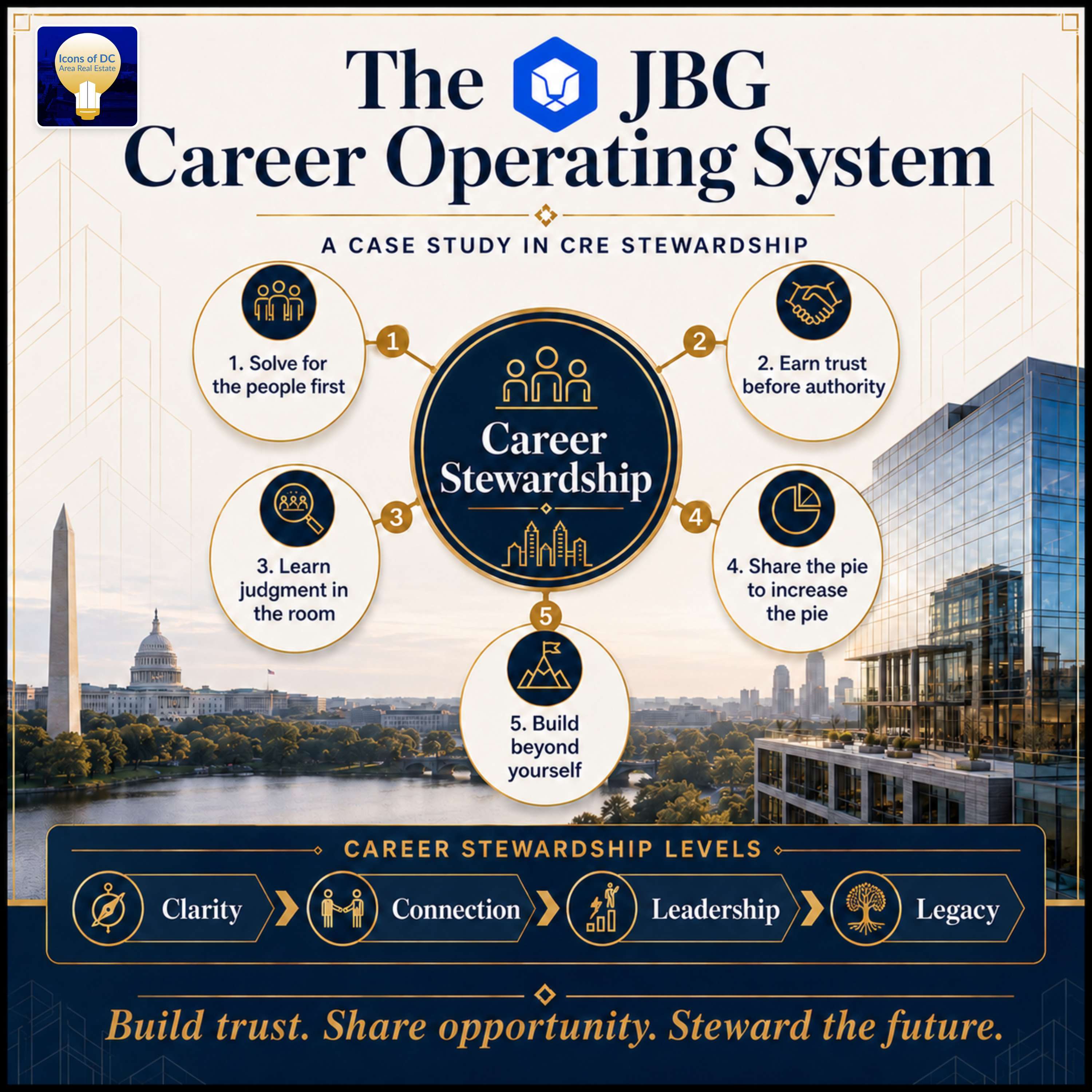
[01:14:31] Speaker C: Exactly. And you know, we, we have a partnership model which is, it's real. First of all, it's earned. It's earned both through tangible production and intangible qualities such as doing the right thing and being the right sort of advocate for the company, mentoring people, being a part of the internship program, whatever it might be, being a good citizen for the company. So you have to earn it. And once you earn it, you're in. We as part existing partners happily dilute ourselves as new partners come in. Because the pie is just getting bigger. And it's true equity partnership, meaning like one set of books, one class of shares, fully transparent, everybody's treated equally.
And in a brokerage business that's very, very important to it creates sort of a cohesion. Win win, a win win. It's very, very hard to get people in this business to really think about the company and think about the greater good and collaborate and share and mentor and give back. In a business where it's an eat what you kill.
They're not getting paid. Most people here are not getting paid salaries.
They're paid solely based on commission.
So like you can't just ask them to do the right thing.
Humans are humans. Like they need to be incentive to do the right thing. And it's the partnership model that really is the glue that keeps it all together. So it makes my job. How do you manage?
[01:15:57] Speaker A: I mean, so for instance, you look at once a year you get bonuses or do you do it more than once a year?
[01:16:03] Speaker C: We do it once a year at the end of the year, once a year at the end of the year, and also once a year. Where we look at, we look at folks that are earning their way towards being qualified to be a partner.
[01:16:15] Speaker A: How many people have you elevated to partnership since you've been here?
[01:16:18] Speaker C: How many people have we elevated to partnership since I've been here? That's a good question. I don't track that. I bet you it's probably been 20 people.
I've been here about 10 years and it's at least to a year.
At least.
And all along people, existing partners are gaining more shares. The way which it works, it's not just like, like the pie is growing.
[01:16:41] Speaker A: Yeah. So. So okay, you have a smaller piece of pie that you have more revenue.
[01:16:45] Speaker C: Exactly. If I own 5% today. But we're going to bring in this new partner. So tomorrow on 4%.
[01:16:50] Speaker A: What?
[01:16:50] Speaker C: Well, it's still worth the same amount because the pie just got bigger. You're exactly right. And oh, by the way, that extra partner, that person that we just brought in as partner, now we can actually rely on them to help us really run this company and run it the right way.
Take on an intern next summer. Put a business plan together for that intern so that they actually have a meaningful experience.
Help Mark Benick recruit. You have all these great relationships out there in the market. Why don't we have somebody that does this specialty? Well, you know, you know that person better than Mark Mannick does. So you go out there and bring them to the table for us.
[01:17:24] Speaker A: So are you looking when you elevate a partner, let's say you want to find somebody that kind of adds to the equation a little bit.
[01:17:32] Speaker C: Absolutely.
[01:17:33] Speaker A: Also not just another person that does the same thing. Somebody that, oh, that person brings something else for sure. So we need them as a partner for sure. Okay. Yeah, absolutely. Interesting.
So when recruiting young brokers, what qualities matter most beyond intelligence and technical skills?
[01:17:52] Speaker C: I'm still trying to figure that out.
But no, it's the. I look across, I deal with a lot of people every day and you start to see what makes the really good ones really good.
And they're not necessarily any smarter, they're not any taller, they're not any better looking. You know, it's simple. They do what they say they're going to do. It's relentless. Follow up.
And it's follow up, follow through, doing what they say they're going to do, taking that one extra step.
It's so simple. And it's, it's. But it's relentless and it's.
You can always rely upon the follow through and in the immediate follow through and not letting anything slip through the cracks, no matter how small.
[01:18:48] Speaker A: What about initiative?
[01:18:50] Speaker C: Initiative? Yeah. And follow through. Yes. I mean I'm on the phone all day with people that work here and no matter what we're talking about something that needs to be followed through on. Right.
Inevitably it's like there's some sort of follow up.
[01:19:05] Speaker A: Sure.
[01:19:06] Speaker C: The really, really top, top tier ones. When I hang up that phone, I get a, I get a calendar invite or a follow up call next week or like they're gonna make sure that it's followed through upon. And then there's.
[01:19:21] Speaker A: So they're accountable, they're super accountable.
[01:19:23] Speaker C: And then there's a group of other ones that we hang up, I hang up the phone and then I think, and then I forget it about it. And then I think about that thing a week or two later and I go, where is that thing?
[01:19:34] Speaker A: And guess what?
[01:19:35] Speaker C: That person is the below average as far as their production here. Inevitably.
And it's simple because that one little thing doesn't really matter. It wasn't so critical that it was, but it was, it's an, it's exactly right.
It's accumulation.
So
[01:19:58] Speaker A: what separates a good broker from a truly exceptional one?
[01:20:01] Speaker C: I think that's it.
[01:20:02] Speaker A: That's it.
[01:20:03] Speaker C: That's it.
[01:20:03] Speaker A: Okay. If you lost every client tomorrow and had to rebuild your career from scratch, what Would you do first?
[01:20:13] Speaker C: That's a good question.
I'd probably mow my lawn.
I would be excited that I didn't have anything to do that day. And I also can think clearly when I do stuff like that. But no, to answer your question more seriously, I would rely on my network. Right.
[01:20:34] Speaker A: Relationships.
[01:20:35] Speaker C: My relationships. And I would just start having cups of coffee. It's the same way I got in this business. It's the same way I re get into it. To answer your question is just start relying on those relationships, finding out what people are doing. Be curious and be curious. That's the advice that I give to all the young people, is be curious.
I'm trying to give it to my 19 year old son right now. Just be curious. You don't need to know what you want to do, but be curious what the other person is doing because then you'll figure it out and they'll be interested in you too.
[01:21:09] Speaker A: You said something earlier, of course, and that's a four letter word.
C, A, R, E. Yeah.
[01:21:16] Speaker C: Kind of care.
[01:21:18] Speaker A: Yeah. Those two things to me for sure
[01:21:21] Speaker C: is half the battle. Yeah. So that's what I do. I just get on a, on a breakfast brigade and figure it out from there.
[01:21:32] Speaker A: So mentorship has always been a cornerstone of commercial real estate. How do you think the industry should better prepare the next generation of professionals?
[01:21:49] Speaker C: How do I think the industry should better prepare them? I think the, we've got to keep driving home the importance of being in person, being in the office.
And I would say, as I say to any young person, I said if, if you get a job, if you don't have a technical skill that you're driven to go, do you want to, you know, if, if you just want to get in an industry that doesn't involve a specific technical skill, don't take a job where you can work from home.
I think that is the worst possible thing that you, you could do as a young person.
Once you develop a career and develop relationships and a network, clients, take your time at home. I'm sure you can be more efficient at least part time from the comforts of your home. But if you're getting into this business, you better get into this business.
And so I think that that is extremely, extremely important.
[01:22:59] Speaker A: After all, what's the purpose of our industry?
Build and use space. Right, right. Not just our own.
[01:23:06] Speaker C: Yeah, for sure. And so I also think the industry needs to do a better job of educating young people about our industry. I think so many people are getting through for sure. They're getting through high school without knowing what commercial real estate is. And even so, in college, they're getting like. We're trying really, really hard to expand our network of young people to get into either our internship program or into our rookie program. And it's very, very hard to get outside of the network that we've relied upon for so long and expand it because people just don't know about this business.
[01:23:42] Speaker A: Talk about your internship program a little bit and why you think it's a really good way for people to kind of get into this industry.
[01:23:50] Speaker C: I'm extremely, extremely proud of our internship program.
[01:23:54] Speaker A: Is this something you originated or was it done?
[01:23:58] Speaker C: They had an internship program long before I got here, But I would say that when I got here, me and a couple of other key partners really, really refined it and professionalized it drastically
[01:24:10] Speaker A: from where it was.
[01:24:12] Speaker C: And I'm proud to say now it's run extremely, extremely well.
We have a goal every year to hire permanently at least one of the people that come out of our internship program, and we've been very, very successful with that. It's a program that starts almost as soon as the summer is over where we figure out who's interested first in mentoring an intern. We will not take on an intern unless we know that we have a group of people that have raised their hand that want to bring somebody on and have a plan put together for that person when they get here, Culminated by like a capstone project. So first, it starts with the desire to have one, not just from the company, but from the actual people that they work with, making sure that they put a plan together for it, and then that determines how many we're going to get.
And every year it's about eight people. It's about eight positions that are available.
This year we had 130 applicants for those eight positions. We currently have eight people. Our goal is to hire one or two of them, and I'm pretty sure we will. Last year we had about 100 applicants. We hired. We had about seven interns, and we have two of them starting this fall. We usually hire rising seniors, so it's not an immediate hire. They go back to school, and that's what's happening. We have two of them from last year's program starting within the next 60 days. I'm extremely, extremely proud of this program. It's a rotational program, so they come in, they spend eight weeks of the summer with us, working primarily for that group that raised their hand for them, that put the program together for them, but then they bounce around Once a week, they get back together as sort of a pledge class and they go to a different office of ours and get schooled. One of those days of the week on one of our specialties, whether it be capital markets or our high street urban leasing team, they'll spend a day with them, walking the streets of Georgetown, showing them all the cool stuff that's happening down there. They'll stay and spend a day with the property management group, learning about property management, day with capital markets, learning about investment sales and stuff like that. And it's all culminated in the eighth week. Their rotational is coming to my executive board meeting. They sit in front of the big board table and they have to present their capstone project.
[01:26:32] Speaker A: So give me an example of one of the most interesting capstone projects that you remember.
[01:26:38] Speaker C: Oh, there's been so many.
[01:26:39] Speaker A: What's the most interesting one?
[01:26:41] Speaker C: I would say that like a couple years back, we had the intern that came out of our data center land advisory group that mapped out sort of all the land that has data center potential and why it has data center potential. Does it have the right power? Does it have the right water?
What sort of jurisdiction is it in? And he created it in a specific, specific area for our data center team. It was a great visual with sound reasoning and really digestible.
[01:27:14] Speaker A: Has it been profitable for the company to use?
Isn't that great? Yeah, that's exciting. Yeah.
Looking back across your career, who were the mentors that most influenced your development and what did they teach you? You mentioned, obviously, Taylor and Tom. Any others?
[01:27:32] Speaker C: Taylor, Tom, John, Milt, I mean, all the Peterson folks. I spent so many years there, and they're just the goat of all mentors.
Milt especially, like, it doesn't really get any better than that. He could take something so complicated and make it so simple. And like we were talking about earlier, have true empathy, but can be really hard, too, and tough.
So I would say, I mean, I have mentors here still, you know, to this very day, that I've developed, just since I came here, some really, really talented people within the walls of KLMB that have been doing the KLMB thing much longer than I have. Adam Miller, John Meyer, Dimitri George Lakis, Michael Pats. Extremely, extremely talented people that I consider mentors to this very day.
[01:28:20] Speaker A: These are all partners in the firm.
[01:28:22] Speaker C: Correct.
[01:28:23] Speaker A: What advice do you find yourself giving repeatedly to the young professionals entering the business today?
[01:28:30] Speaker C: I talked a little bit about this earlier. Show up, show up, show up, show up, get up, get into the office and get around to various Other offices. The most valuable thing that you have is being a part of KLMB. And there's 110 people here that do a variety of different things become invaluable to those people, which means you have to be present first and then once you're present, do what you say you're going to do and don't ask to be reminded. Do it immediately and just do it. It's so easy. So many people just don't follow, follow through, or they take too long to follow through.
And so you become invaluable to these people.
They will bring you in on business and one plus one will equal, you know, infinity.
[01:29:18] Speaker A: Well, to me, you hear and watch, but you also bring your own perspective, too.
So the other thing is you want to add to the equation.
You don't want to just be, you
[01:29:29] Speaker C: know, take sure you want to give, right?
But what do you have to give it when you're, when you're just coming in? What do you have to all you have an angle, a different angle. But, you know, you gotta just take the. Take the little things that you can get and they become big things over time.
[01:29:46] Speaker A: So what are the most.
What are most investors getting wrong about retail real estate today?
[01:29:56] Speaker C: I think that a lot of people are getting out of their comfort zone. I think the best real estate investors, the best real estate companies are staying focused on one thing and doing one thing really, really well. Some of the best ones are doing that. I talked a little bit earlier about, you know, the regencies of the world, the Kimcos, the Federals, like, they do one thing and they do it very, very well. And I think a lot of people are getting lost in finding the flavor of the day, whether data center is a good example. They're hearing about data centers, they're trying to get into the data center game. They have no idea what they're doing. So I think what investors maybe are getting wrong today is getting outside of what their core specialty is.
[01:30:40] Speaker A: Well, I was a generalist in finance, so I'd finance an office building one day, a hotel the next, the shopping center the next. So I'd look at all the product types.
But my. And of course, my father was a retailer, so I, I'm a little biased in that respect.
But to me, the most complex financing and the most complex investment, in my experience, is retail. And why do I say that?
Because it's a fickle business. How do you.
You don't know what the consumer really wants and you're guessing.
You can't tell me a Retailer knows exactly what a customer's gonna want every time, but they're trying to figure that out every day.
[01:31:26] Speaker C: The customer doesn't even know what the customer wants.
[01:31:28] Speaker A: That's the challenge. And it's so hard.
Now, hotel business is a lot like that because to me, hotel business is retail. I mean, you're selling a night, every day you're selling it. So to me, that's like retail.
[01:31:42] Speaker C: Sure.
[01:31:43] Speaker A: Industrial is a different game.
You're just, you know, providing space to store or build or do something structurally, an office. Of course, because of societal changes, it's an ever evolving business.
You know, why do people go to an office space?
What's the purpose of being there?
And we lost that in many ways. But in retail, it's just interesting.
[01:32:13] Speaker C: It is, it's exciting stuff.
[01:32:16] Speaker A: What do you think retail does? What is it about retail that makes it unique in your mind?
[01:32:21] Speaker C: Everybody's an expert at it. I mean, everybody thinks they're an expert at it.
[01:32:25] Speaker A: Right?
[01:32:25] Speaker C: Everybody touches retail.
Not everybody touches industrial. Not even. Everybody touches office and not even everybody touches hotels.
Everybody touches retail. Everybody goes to the store to get milk. Everybody goes to buy a shirt.
So your neighbor, my neighbor, if you talk to them about what you do, they have an opinion about it.
They're an expert in their own mind about your business, which is untrue about any other asset class. I think If I ask 10 people that are not in commercial real estate what they know about retail, they're going to tell me something. If I ask those same 10 people what they know about industrial, probably nine out of 10 of them are going to say they don't know anything about it.
[01:33:08] Speaker A: Well, the other one, of course, is where you live.
So what apartment, what housing?
[01:33:13] Speaker C: Right.
[01:33:14] Speaker A: So I would say that retail and
[01:33:16] Speaker C: houses probably analysis, Correct. Good point.
[01:33:19] Speaker A: But those are, you know, everyday things.
[01:33:22] Speaker C: Sure, for sure.
[01:33:24] Speaker A: What technologies do you believe are genuinely transforming commercial real estate? And we're receiving more attention than they deserve.
[01:33:34] Speaker C: Is it possible to give the same answer for this, for this question, for both questions? Because I'm going to give it. What technologies are transforming real estate is AI? You know, we are leaning heavily into it. We're taking our data, we're trying to figure out what's in that data, how we could use it better. We're using tools, better marketing is changing drastically with AI. Like it is drastically transforming the way in which we do what we do.
What is receiving more attention than it deserves is that very same thing.
Like, at the end of the day, it's still going to be A people's business. People business for a long, long time. And so I think it's getting more attention than it deserves. That it's going to put us all out of business.
I don't think that's happening anytime, even in my kid's lifetime. It's just too much of a.
[01:34:32] Speaker A: What would you tell a college student that's going, getting a new job today vis a vis AI is taking away all of our opportunities. How do you, how do you respond to that?
[01:34:42] Speaker C: I don't know. It's a tough one to respond to. I would just say make sure that you know how to use it.
The good, the good news is that everybody has access to it, everybody can practice it, everybody can use it. And the good news is also that so few people are really experts at it.
So just start using it and be curious about it.
But it isn't everything in every business.
So don't just use it at home, get out, get out and develop relationships, get in the office, deal with people, all while using these tools.
Don't do it exclusively on either sides of that.
Don't just sit at home and figure out how the tools are going to make you more effective. And don't just go out and ignore the tools. Ignore the tools.
I mean, it's email. I know it's vastly different than email, but I'm going to make myself sound old. But when I first got in the business, there were people.
Email was pretty new. In the late 90s there were people that were still not using email and those people became extinct a lot quicker than the people that were using. So this is just a very, very supercharged version of that.
[01:35:59] Speaker A: What's ironic is if you get a handwritten note from somebody today, it's a very special, it's almost experiential.
[01:36:06] Speaker C: I just got, I just sent a text this morning to one of my people who wrote me a handwritten note. I was like, you don't understand what a lost art this is.
[01:36:18] Speaker A: It's incredible.
So what opportunity in today's market would you be most excited to pursue if you starting your career again?
[01:36:33] Speaker C: That's a tough one. I think I will go back downtown. The resurgence of what's going to happen downtown I think in the next 20
[01:36:40] Speaker A: years is going to be, how do you say that?
[01:36:42] Speaker C: Pretty fun. I just think that it's still the capital of the country and I still think that it's surrounded by some of the best demographics in the country.
Highly educated, tremendous health care, government that is going to turn and put new butts in the seats.
[01:37:04] Speaker A: And what about dysfunction?
[01:37:07] Speaker C: What about dysfunction?
Yeah, yeah. There's always dysfunction in politics and our city has got a lot of it. But I, I'm actually optimistic that you
[01:37:19] Speaker A: feel there's a resiliency.
[01:37:20] Speaker C: I do, I do. I really do. I think a lot more people, I mean, I see it already in young, even with young people now, that's where they want to live.
New York's the same way. Everyone's like, new York's dead. No one's ever going to want to go back to New York. Go to New York. That's where people want to live. That's where the interesting people want to live.
[01:37:36] Speaker A: There's energy, there's energy.
[01:37:38] Speaker C: You can't, you can't. It's hard to replicate energy outside of the urban core.
[01:37:44] Speaker A: I mean, anybody that's ever been to New York City, if you don't feel like you just got a shot of electricity in your body when you're walking
[01:37:51] Speaker C: there, and that's the epitome of it. And so the closest thing that we have to have here is I still get a jolt of energy when I go down to the downtown office.
[01:38:00] Speaker A: You walk Georgetown. Yeah, you get that energy.
But unfortunately, the pandemic, you know, sapped a lot of that out of the market. It may be coming back now, but even recently, I was on a month ago downtown, it's not the same. You're not quite there yet.
[01:38:15] Speaker C: What part of downtown?
[01:38:17] Speaker A: L Street. Yeah, walk down. When I was, I worked at 2101 L from, let's see, 2013 until about 2019.
You walked down that block, you had food trucks, you had.
[01:38:32] Speaker C: Yeah.
[01:38:33] Speaker A: You had retail, you had just.
[01:38:34] Speaker C: It's a long ways from that.
[01:38:35] Speaker A: It was incredible. Just the streets were four or five deep.
Not just at lunchtime, but almost all day.
[01:38:42] Speaker C: Yeah, it's a long ways from that. And it's never going to go back to that version of D.C. but I think that there's another resurgent, a different form of that. But even then that wasn't ideal because guess what happened at 4 o' clock on that day or 5 o' clock gone. And that wasn't really sustainable either. That didn't really create a.
[01:39:01] Speaker A: So what you're saying is it's gonna,
[01:39:03] Speaker C: it's gonna be more of a 24
[01:39:04] Speaker A: hour place because of the residential.
[01:39:06] Speaker C: Yeah.
[01:39:07] Speaker A: Thing. So the question is, what retail do you put in and where is it gonna be? Ground floor? Is it gonna be multi level? Like a. You know, let's just say it won't
[01:39:16] Speaker C: be multi Level, I don't think. Because we don't have.
[01:39:18] Speaker A: We won't see a water tower place.
[01:39:19] Speaker C: No, we don't. We don't have enough density and I mean, until they change the 13 story rule or whatever.
[01:39:24] Speaker A: Which could happen.
[01:39:24] Speaker C: Which could happen.
[01:39:26] Speaker A: That would be dramatic.
[01:39:28] Speaker C: Absolutely.
[01:39:29] Speaker A: The city.
So after more than a four decades of commercial real estate, what wisdom can only be learned through experience and not taught in the classroom?
[01:39:42] Speaker C: The value of relationships. I think I'm going to go back to that. It seems to have been a common theme in this conversation. But nobody, I was never taught the value of that in a classroom, that's for sure.
[01:40:00] Speaker A: On the playground you might have, maybe, maybe.
[01:40:05] Speaker C: But there's just.
There's so much that can't be learned in the classroom. I mean, on the field experience or on the job experience.
How people interact in meetings. So much of this business is just a people business that, you know, you just got to get into it to learn it and figure it out. I took my son a couple of years ago to a meeting. He was in high school and we were up in Baltimore. I was in the Greenberg Gibbons office meeting with Eric Walters.
He was probably a sophomore or junior in high school. Sat in the meeting and listened to Eric and I talk. And we probably had about an hour and a half meeting and we probably spent 45 minutes of it just talking about, about our families and T ball practice and the latest vacation that we went on or whatever it was. It was like we didn't get down to business until well into the meeting. And I went in the car, I said, drew, what'd you think? And he's like, you guys, you guys didn't even talk about business. I was like, yeah, we did at the end, remember? He's like, I know, but you spent all this time not talking about business. I said, yeah, well, that's kind of how it goes in this business.
[01:41:13] Speaker A: Well, it's funny, I brought my son to work and he said, you guys, how do you do it? You guys aren't.
[01:41:20] Speaker C: You're not even doing anything.
[01:41:22] Speaker A: Yeah, there's really nothing being done there.
He said the same thing. Yeah, it's funny, but it's a relationship. It's developing time and relationship with people. As you think about your career, what accomplishments are you most proud of?
Not the deal, but the impact.
[01:41:39] Speaker C: I think I'm really proud of what KLMB has become since I came.
Not only are we a larger company, but we've maintained, say maintained we've created a really special culture.
I think people generally Enjoy working here and think that the company cares about them. And that's something that, that I really learned from the Peterson family and the Peterson companies. And I'm really proud to have been able to take some of that DNA and bring it here to klmb. I think that to me that is way more, I'm way more proud of that than a picture of a development that I worked on that I have
[01:42:23] Speaker A: on my family culture. To a partnership.
[01:42:25] Speaker C: Trying my best to. Yeah, yeah, it's hard because it's not a family. KLMB is not the Peterson. KLMB is a partner owned firm owned by a lot of different people. And our assets are just the people and not the actual assets. It's very, very different. There was a lot, I stumbled on that a lot because this is, you know, this is very different in a lot of ways. And so it had to, had to be done differently than they do.
[01:42:48] Speaker A: It's a people company, not a real estate company in some respects.
[01:42:51] Speaker C: Yeah, yeah. But we're making, you know, what I have to instill in people trust too, is that the decisions we make and the impact we have has a real, real impact on the community. I mean, we're putting tenants in places, we're solving for food deserts, you know, like this. It's really meaningful to people in their community. And while we don't own that, we may not own that asset like others do. We still are making a tremendous impact.
[01:43:22] Speaker A: So when your colleagues and clients look back on your career years from now, what do you hope they remember?
[01:43:30] Speaker C: That we did the right thing and that we had some fun doing it, you know, that we said we were gonna do, we didn't treat you unfairly and we kind of laughed a little bit along the way.
[01:43:44] Speaker A: You had fun?
[01:43:45] Speaker C: Yeah, had a little bit of fun.
[01:43:46] Speaker A: That's great.
So final question. If you could place a billboard anywhere in the Washington metropolitan area, maybe on the Capitol Beltway, with a message for commercial real estate community, what would it say and why?
[01:44:00] Speaker C: It's a hard one. I'm going to go back to.
Get in the office, get around your peers.
You cannot learn about this business on the computer screen.
AI cannot teach you about this business.
It can teach you a lot about this. It can't teach you what you really need to know about this business, which is where things are going, what's happening, how it's happening, and that's future stuff. You can't learn future stuff unless you get in and you start talking to people.
So back to your question. What does the billboard say go to the office.
[01:44:40] Speaker A: Okay. Anything else you'd like to say, Mark, before we.
[01:44:44] Speaker C: No, I just want to thank you.
I've known you a long, long time. Before we started, before we hit record, we were talking about being together on 911 down in the Washington Hilton. And I just have a lot of memories of being with you at various different networking events where you had this sort of desire or curiosity about me and my career that has obviously gone on to become the reason why you have such a great podcast. You're clearly curious about a lot of different people. I wasn't that special. You're curious about a lot of different people and you do it very well. So thank. But I'm honored. Thank you for including me on this.
[01:45:22] Speaker A: Thank you, Mark. I really appreciate it. This is a very good interview tonight.
[01:45:25] Speaker C: Thanks a lot, John.
[01:45:26] Speaker A: Thank you.
[01:45:27] Speaker B: As we wrap up, one thought struck me as I listened to Mark's interview Insights. Mark talked about something that resonated deeply with me. The importance of stewardship, mentoring, and giving young professionals both a map and a guide for their careers.
After more than 46 years in commercial real estate, mentoring through ULI and recording over 140 conversations with leaders like Mark, I've come to believe that successful careers rarely happen by accident.
They are built through intentional decisions, meaningful relationships, sound judgment, and a commitment to continual growth.
Those lessons have inspired me to create the CRE Career Stewardship Advisory, a structured advisory designed specifically for commercial real estate professionals who want to build their careers with greater clarity, purpose, and long term perspective.
This fall, I'll be opening a small inaugural cohort.
If Mark's thoughts on mentorship and career development resonated with you, I invite you to learn more.
You'll find information in the show notes and I'll be happy to have a
[01:46:38] Speaker A: conversation to see whether the program is a good fit.
[01:46:42] Speaker B: Until next time, build your career with
[01:46:45] Speaker A: intention, lead with integrity, and steward the opportunities entrusted to you.
Thank you for joining me, Sam.